Friday, March 9, 2012

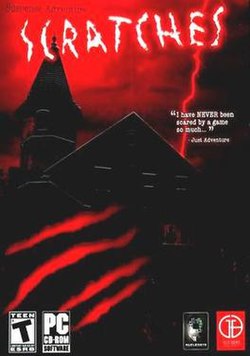
Scratches (2006)


One particular trope that horror authors like to visit in particular is secluding a writer in a cabin or otherwise spooky house and causing those who would write fiction to go through such a thing in reality. The 2006 point-and-click horror game Scratches is no stranger to this idea, but it plays along like it's never heard of it before - not that this is necessarily bad. As I've stated before, sometimes things that stick to a particular style, even if it's been beaten relentlessly, work out simply because they know what is required to execute that idea successfully.

Over the course of three days, you play as Michael Athrate, a successful suspense/thriller author who has recently acquired the Blackwood estate. This particular piece of real estate was the fruit of a long search by Atherate's agent, due to his client demanding a space that would make his imagination run wild in order to write a sequel to his best selling novel. Since Athrate writes in the horror genre, the game follows such a path; obstacles begin to appear in the form of no power, and then scratching noises making themselves present in the middle of the night. Athrate slowly begins to uncover the true story behind the Blackwood estate as he explores the grounds and rooms of the house. Everything is detailed elaborately, bringing the half-built Victorian mansion to life. From wallpaper to various baubles on table tops, the house looks like a lush haven for a wealthy family: but of course, these sorts of houses have their secrets, and the Blackwood estate's are a little darker than most.

James T. Blackwood, the original owner, was an extensive collector of African tribal art - it's influence can be seen throughout the house as well in a second-floor museum focused entirely on the subject. In a journal in Blackwood's study, the player can discover that on a particular trip, Blackwood stumbled upon a rare and believed to be mythical cannibalistic tribe. They were apparently being led by a mask (no, no Jim Carrey jokes here please); Blackwood became so enamored of the object that he made plans to steal it, and eventually import it back to America. The events that transpired afterward is where you, the player, come in. The puzzles of the game are fairly straight forward and bring everything together in a slow fashion that will leave you wanting more. The scares are few and far between, but the scenes that do their best to make you jump in your seat will definitely do just that the first time you see them; repeat plays will probably not have the same effect. The first person point of view certainly lends the idea that you're right there in the action, which coupled with a dark room and headphones can certainly make for a horror-inspiring atmosphere.

The game altogether is a fairly quick playthrough, not really taking more than 8 hours (if that); but it's a great interactive novel. I didn't know this until recently, but the Director's Cut edition has an extra side quest to give you more information after the ending of the game. Titled "The Last Visit", you play as the reporter who returns to the Blackwood estate 10 years after the events of the original game in order to do one last piece on the events before the house is torn down for good. Overall, this game is great for people who like a good, slow horror story - Scratches: Director's Cut is available throught Steam for just $9.99.


Wednesday, March 7, 2012

The Last Lovecraft: Relic of Cthulu (2009)


What It's About: When average-guy Jeff learns he's related to world-famous "weird fiction" writer H.P. Lovecraft -- and that he's the very last leaf on the Lovecraft family tree -- he gets drawn into a plot to keep an ancient artifact out of alien hands. If he fails, the nefarious Starspawn could harness the relic's power to summon the alien god Cthulhu. And if that happens, the whole universe is at risk.

Review: Lovecraft's stories are terrific fodder for horror films - the purple prose is rich with horrific descriptions of alien beings that would tear a mortal's mind asunder with just their mere presence. However, The Last Lovecraft: Relic of Cthulu is not really that film. It's a horror comedy that revolves around a trio of geeks, one of whom happens to be the last living descendant of Lovecraft himself (despite the fact that Lovecraft never had any kids - shhh, it's a secret!). We are introduced to Jeff and Charlie, two working stiffs who have been friends since they were young. Jeff is oblivious to women, while Charlie is far too involved with his various action figures. Into their hum-drum lives comes crashing the Council of Cthulu, who need to hand over one half of a precious relic that could be used to summon the octopus-faced deity from the watery depths. They just have to keep it away from the Cult of Cthulu, who have the other half and wish to summon their terrible master so that he might once again rule over the planet.

Council...Cult...Confused yet? 

Monday, March 5, 2012

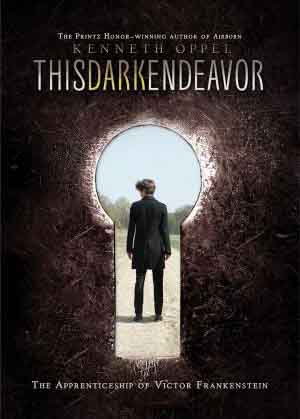
This Dark Endeavor: The Apprenticeship of Victor Frankenstein, Kenneth Oppel (2011)


Anyone who reads this blog knows that I have a deep passion for pretty much anything even remotely related to Mary Shelley's classic, Frankenstein: The Modern Prometheus. I have reviewed a few sequels to the book, but This Dark Endeavor goes in a completely new direction. Titled a prequel, it's really more of a reimagining of the story of a mad scientist and his creation. This, this right here is how you do "reboots" or "remakes", you come at the subject from a different view point and try to see how it can be reinvented, examined from a new perspective. Not only that, Oppel's descriptive, florid writing isn't overbearing, instead bringing a level of intelligence I've come to expect in anything that wants to try and stake a claim on the Frankenstein legacy.

In Oppel's version, Victor is born with a twin brother, Konrad. The two are identical and inseparable, and along with their cousin Elizabeth and good friend Henry Clerval, this band of intelligent young people spend their days in a lap of luxury. Henry is an aspiring writer (though he knows that it will never amount to much if he wishes to truly support himself) and writes plays that his friends perform. Victor is an arrogant, rash young man, setting himself clearly apart from his twin, who is not only the elder, but the more charismatic, intelligent, and generally well liked of the two. One might think that this would lead to enmity between the brothers, but in truth they work together like two sides of the same coin. Elizabeth, the only female of the group, and the main female character of the book, keeps up with the boys with little issue, able to add in their debates and even taking part in their learning as a part of the Frankenstein's liberal household. 

A thirst for knowledge runs deeply in the group, and they stumble upon a hidden library in the house; a Dark Library, full of occult knowledge and alchemy spells. Victor and Konrad's father discover the group in the library, and ban them from ever entering it again, for alchemy is illegal in Geneva and he would not have his children mixed up in something as sodden as "magic". Victor's interest is piqued, but he is content to leave well enough alone until Konrad mysteriously falls ill. He continues to worsen, even as treatment after treatment is given to him. Victor finds that the only solution may be an Elixir of Life, described in one of Agrippa's books (Heinrich Cornelius Agrippa, a German magician and alchemist). But the text is written in code, and in order to break it, Victor, Elizabeth, and Henry are force to seek out one who is familiar with the craft of alchemy. This search leads them to Julius Polidori, undoubtedly named for Lord Byron's doctor, who was a well-known companion of Bryon, Percy Shelley, and Mary Shelley. 

The book follows Victor's adventures in collecting the three items needed to create the elixir - and in the discovery of alchemy, Victor learns much, much more about himself that he ever thought he would. Not only does he have a gift for crafting alchemical potions, but he comes to learn that he and his brother are at odds over the subject of Elizabeth's heart. I personally enjoyed seeing the usual young adult love triangle told from the perspective of one of the suitors; it was also good that the romance did not make up the bulk of the novel. The true focus of the book is on the relationship between Konrad and Victor. Its easy to see where the sequel, Such Wicked Intent (due out in August of this year), is going to head, but I loved that the book played with similar elements as that of the British stage play version of Frankenstein, put on by the National Theater. It's the thought that Victor and his Creation are two sides of the same coin, complementing and completing each other in a richer way than any romance or relationship could. 

Homages to the original novel abound throughout the book, popping up with delight for the reader who can spot them. It certainly lays out where the story can go, but I trust Oppel to make it quite a journey to get to the end - for in the telling of any story, it's more about the obstacles that the protagonist must pass through in order to reach their ending rather than the ending itself. For a young adult novel, this book was gripping, and I had it finished within days of finally locating it. If you're looking for a great, quick read, I highly recommend this book.


Saturday, March 3, 2012

Saturday Horror Shorts #4


Welcome to yet another edition of SHS! Today's showing is something a little less typical than most horror fare - it starts out leading the view into thinking that it's following one pattern, and then adds a new element that completely changes the whole thing. The short film is surreal and moving, ever switching things up to keep you on your toes until the very end! Check out Endless by Michael Bloom. Get the popcorn, dim the lights, and be sure to watch it in full screen!


Have a great weekend!

Friday, March 2, 2012

The Ward (2010)


What It's About: A thriller centered on an institutionalized young woman who becomes terrorized by a ghost.

Review: John Carpenter - that's a name pretty much anyone who is even slightly into horror films should know. I mean, the man came up with Michael Meyer/the Halloween series. Carpenter isn't one of my favorite directors to be perfectly honest with you; he opts for the slow creep, the idea that tension builds to a huge payoff, but unfortunately this is rarely the case. The Ward fits into this category - a slow thriller about a troupe of girls locked up a mental facility, slowly being picked off by a ghost. Sounds like a great idea, right? Unfortunately, the execution is off, leaving the viewer waiting to be scared but never actually reaching that point. And then there's the ending, but I don't want to spoil that for those who do want to watch this film.

The film will certainly give it's all in trying to scare you.
Related Posts Plugin for WordPress, Blogger...