Showing posts with label 2006. Show all posts

Wednesday, February 27, 2013

House of Usher (2006)


Potentially a reboot of the classic Vincent Price/Roger Corman film, or else a modern day adaptation of the Poe story, House of Usher doesn't really do a whole lot outside of its pretty cinematography to entice the viewer into watching.

If you're familiar with the story, you'll essentially know what's going on. Jillian, a massage therapist, drops everything when she hears that her best friend, Madeleine Usher, has passed away from a mysterious illness. She drives to the Usher family estate for the funeral, and ends up reconnecting with Madeleine's brother, Roderick (given the shorter, sportier nickname Rick), who is her ex. So, yeah, a few changes to the short story, and that's only a few.

But the majority of the film encompasses Jill and Rick debating their hot and cold relationship (usually in soft whispering voices that almost make it seem like the actors weren't really sure how to approach the material), Jill whining about Rick keeping secrets, and, well, more slow dialogue. Jill does get fleeting glimpses of Maddie throughout the house, but that's all they ever measure up to be as the maid (played by Beth Grant, who's characters are usually a little kookier and more fun than the tight-lipped, sour faced woman she's called upon to be here) is ever present to stop her from lingering too far.

You can tell something weird is up when Rick spends most of his time either a) writing an atrocious sounding novel that I'm sure is supposed to be reflective of Poe himself but sounds a bit more like bad 8th grade poetry or b) sexing Jill up under the pretense of "needing comfort" after his sister's death. I guess sex is the only thing guys can think about after all? Once Jill ends up pregnant (apparently Rick's endgame), all the family skeletons come out of the closet and the dastardly truth of calling Jill to the homestead comes to light.

Overall, I'd skip this film and watch the Vincent Price version where the characters are brought to life much more vividly and the back story in it isn't as slimy. Certain additions to the film really turned me off to it, including Jill's pregnancy and other facts that I won't disclose here if you still feel inclined to check this thing out. I'm usually down for anything Poe related, but this was a real bummer.


Wednesday, February 13, 2013

Renfield: Slave of Dracula (2006)

For those who read this blog, it's pretty obvious that I have a deep and abiding love for anything Frankenstein. But that doesn't mean that I ignore the other well-known horror characters that resound throughout our culture. Who am I talking about here? Well, Dracula, of course, probably the most popular and well known creature of them all. There have been countless spin-offs, reworkings, refurbishments and allusions to this classic work, but it's often difficult to find something that is wholly original and really takes the old story to a different level. Such was the case with Renfield: Slave of Dracula by Barbara Hambley. Focusing on a key but lesser regarded character is definitely something that caught my eye, especially when it came to this particular lunatic who's set the standard for many a vampire's lackey. 

Renfield is mainly known for being Jonathan Harker's predecessor and for being a lunatic after returning from a trip to visit with Dracula. In film adaptations, his role is sometimes expanded beyond that to doing more for the Count, but beyond that very little is known of him -- he's often not even given a first name. But in Renfield: Slave of Dracula we're introduced not only a name but to a backstory of a family, and a man tortured by the demons in his mind. His wife came from an upstanding family that was skeptical of her marriage to a merchant class man, but it's evident that the two hold a deep love for one another. From this union came a daughter, Victoria, affectionately called Vixie. Renfield writes countless letters to them both, showing that he is a man filled with emotion.

But he also has demons to contend with. Many times we are shown a hallucination that Renfield names Wotan, though it's Dracula. This thing taunts him by showing him images of past kills and tortures him with the impending doom of Lucy and Mina, in whom Renfield sees reflected his own daughter. The book shows journal entries, logs, bits of narrative to flesh the whole thing out, and it's really quite the spellbinding story when compared to Stoker's original novel (you know that thing reads like sandpaper). And the story doesn't end with Renfield's death, as is often shown at the hands of the Count while still entombed in the lunatic asylum. Instead, he's taken in by two other vampires who seek the Count's demise, and give Renfield a second chance in order to make right what he has done wrong.

Overall, I thought this was one of the better Dracula sequels I've read, especially considering the small amount of material that Hambly would have had to work off of. Her writing is superb, easily bringing the story to life for the reader's pleasure.

Wednesday, March 14, 2012

Hack/Slash (2004 - Present)


The final girl is not a new phenomenon in horror films - from strong female characters like Laurie in Halloween to Nancy in Nightmare on Elm Street, final girls are pretty awesome. They're the ones left standing, the ones who generally bring an end to the slashers that they are unwittingly pitted against. In the world of slashers, which is a genre of film that caters mainly to the base desires of lust and gore, having some kind of ideal that brings some kind of substance (however small) to a normally shallow film is a good thing.

And then there's Hack/Slash, which is a comic book dedicated entirely to the idea of final girls. Cassandra Hack, aka the Slasher Killer, is definitely a character that I can get behind. Coming from the roots that one might attribute to a serial killer (although, with Cassie, that topic is debatable), Cassie is the daughter of the infamous Lunch Lady - a woman who killed the students who picked on her beloved only child. Cassie is forced to turn her own mother over to the authorities, causing the woman to kill herself by sticking her head into a pot of boiling water. Oh yeah, this comic doesn't skimp on the gore, at all.

Cassie goes on to become a slasher slayer, a young woman who travels across the country to protect people from killers just like Freddy and Michael and Jason (oh my). She even runs afoul of quite a few well known killers, like Charles Lee Ray, better known as Chuckie, and Herbert West of H.P. Lovecraft fame. Along with the usual titillation of short skirts and skimpy shirts, Cassie also plays by the usual rules of slasher horror films (set into stone by Wes Craven's Scream series), albeit not by choice. She's a virgin, doesn't drink, and usually doesn't say that she'll be right back, though she is definitely guilty of rattling off ridiculous one liners.

My personal favorite villain of the series is Cassie's polar opposite and really brings out the interesting parts of her character: Laura Lochs, a religious zealot who dresses like the prude she is and yet wields arcane black magic in order to achieve her ends. After she gave her virginity up to the man she loved, he promptly scorned her and brought about Laura's righteous wrath. Using arcane tomes from her school's library, she resurrects a priest who committed suicide after it was discovered that he was gay (yes, there's a pattern here that isn't difficult to see). While Cassie skips around in her barely there underwear, she still has more morality than Laura can claim to have in her little finger. It's a definite case of don't judge books by their covers, because you certainly won't be getting what you see. Laura is the upstanding pillar of the community who's educated, had sex and dabbles in the dark arts in order to achieve her ends; meanwhile Cassie has a high school level of education and gets by with a knife in her hand. 

The comic definitely panders to the lust of the cis heterosexual male, but in all truth it's playing off the riffs of what makes a slasher film a slasher. Horror films operate on the idea of fear, as well as a sort of behavioral programming method for young adults - anyone doing anything deemed "bad" in a horror film will be axed. Drinking, drugs, having sex, you will die in some absolutely horrible way, brought to that terrible end but this mute creature of a man (or, in Freddy's case, one who just won't shut up). Then you've got characters like Vlad, who certainly don't fit the stereotype of the male fantasy: raised by a butcher, Vlad was ugly from birth and incredibly malformed. Only through the teachings of his adopted father did he survive, and eventually go on to help Cassie in her quest to stop the slashers, even as their quest seems to be an unending, unforgiving, and lonely one.

 From the backlots of Hollywood to across time and space, Cassie travels all over and where ever she's needed to stop killers before they start preying on the young and stupid. Other notable appearances are Wizard of Oz characters and the Archie comics. Each issue is sketched by artists with incredibly varying styles, but each brings their own interpretation of Cassie's gothic look to a new level that fits the various stories they are telling. I suppose my personal favorite would be when Mary Shelley Lovecraft invades a sleepy little town, turning all of its townfolk into Cthuluian fish people - or the time when Cassie had to figure out how to stop a killer who moved through the internet, literally. There are millions of stories to pick through, each quite possibly more amazing than the last.

Hack/Slash is published by Devil's Due Publishing; Omnibus 4 is due out April 4 of this year, so if I were you, I'd get the other three and catch the f*** up!

Friday, March 9, 2012

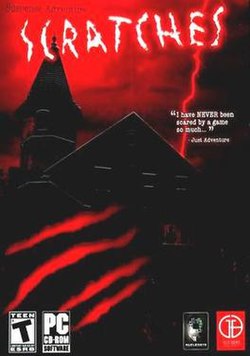
Scratches (2006)


One particular trope that horror authors like to visit in particular is secluding a writer in a cabin or otherwise spooky house and causing those who would write fiction to go through such a thing in reality. The 2006 point-and-click horror game Scratches is no stranger to this idea, but it plays along like it's never heard of it before - not that this is necessarily bad. As I've stated before, sometimes things that stick to a particular style, even if it's been beaten relentlessly, work out simply because they know what is required to execute that idea successfully.

Over the course of three days, you play as Michael Athrate, a successful suspense/thriller author who has recently acquired the Blackwood estate. This particular piece of real estate was the fruit of a long search by Atherate's agent, due to his client demanding a space that would make his imagination run wild in order to write a sequel to his best selling novel. Since Athrate writes in the horror genre, the game follows such a path; obstacles begin to appear in the form of no power, and then scratching noises making themselves present in the middle of the night. Athrate slowly begins to uncover the true story behind the Blackwood estate as he explores the grounds and rooms of the house. Everything is detailed elaborately, bringing the half-built Victorian mansion to life. From wallpaper to various baubles on table tops, the house looks like a lush haven for a wealthy family: but of course, these sorts of houses have their secrets, and the Blackwood estate's are a little darker than most.

James T. Blackwood, the original owner, was an extensive collector of African tribal art - it's influence can be seen throughout the house as well in a second-floor museum focused entirely on the subject. In a journal in Blackwood's study, the player can discover that on a particular trip, Blackwood stumbled upon a rare and believed to be mythical cannibalistic tribe. They were apparently being led by a mask (no, no Jim Carrey jokes here please); Blackwood became so enamored of the object that he made plans to steal it, and eventually import it back to America. The events that transpired afterward is where you, the player, come in. The puzzles of the game are fairly straight forward and bring everything together in a slow fashion that will leave you wanting more. The scares are few and far between, but the scenes that do their best to make you jump in your seat will definitely do just that the first time you see them; repeat plays will probably not have the same effect. The first person point of view certainly lends the idea that you're right there in the action, which coupled with a dark room and headphones can certainly make for a horror-inspiring atmosphere.

The game altogether is a fairly quick playthrough, not really taking more than 8 hours (if that); but it's a great interactive novel. I didn't know this until recently, but the Director's Cut edition has an extra side quest to give you more information after the ending of the game. Titled "The Last Visit", you play as the reporter who returns to the Blackwood estate 10 years after the events of the original game in order to do one last piece on the events before the house is torn down for good. Overall, this game is great for people who like a good, slow horror story - Scratches: Director's Cut is available throught Steam for just $9.99.


Wednesday, February 8, 2012

Hatchet (2006)


What It's About: When a group of tourists on a New Orleans haunted swamp tour find themselves stranded in the wilderness, their evening of fun and spooks turns into a horrific nightmare.

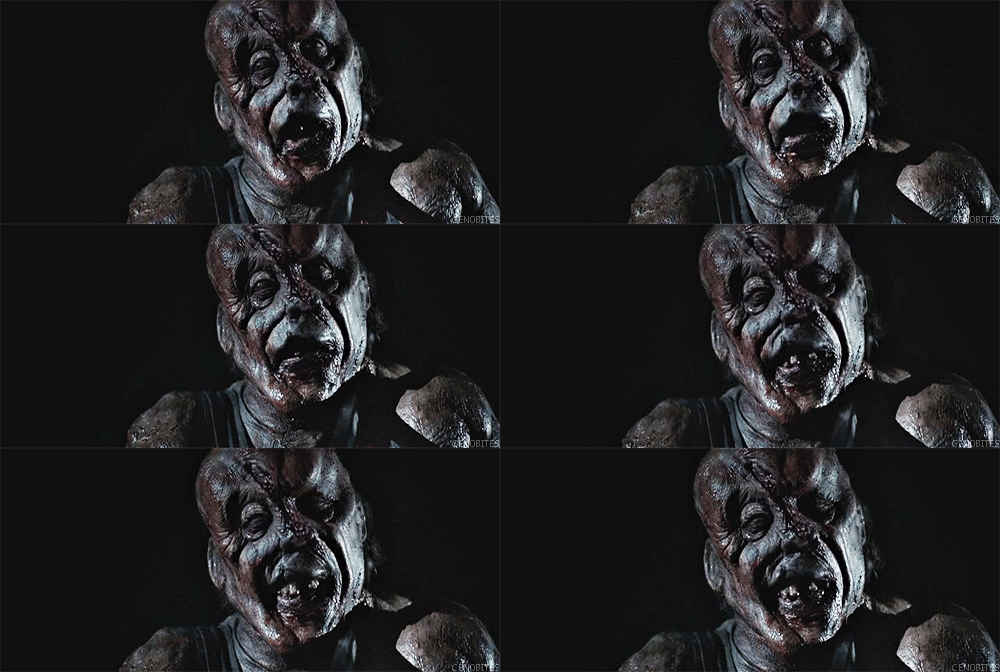
Review: Slasher films have definitely become a staple of horror films; where once it was all Gothic and nothing but atmospheric music and fog now comes visceral sprays of blood and gore in order to truly frighten a public that was too quickly becoming bored of the simplistic idea of 'less is more.' Of course, once you start going down the path of showing rather than telling, people become desensitized, and then things get ramped up past eleven so your audience feels something...and you see where this is going. Of course, not all slasher films are bad - in fact, Nightmare on Elm Street, Halloween, and Friday the 13th are all familiar faces (Freddy, Michael, and Jason, respectively) that every horror fan knows and loves. But its a very fine line in proving what makes a good slasher - generally the requirements are nothing more than a huge lumbering man who doesn't speak and either kills teenagers who drink and have sex or is just really pissed off for some inexplicable reason. And Victor Crowley fits that stereotype nicely. 

Smile for the camera!

Related Posts Plugin for WordPress, Blogger...